
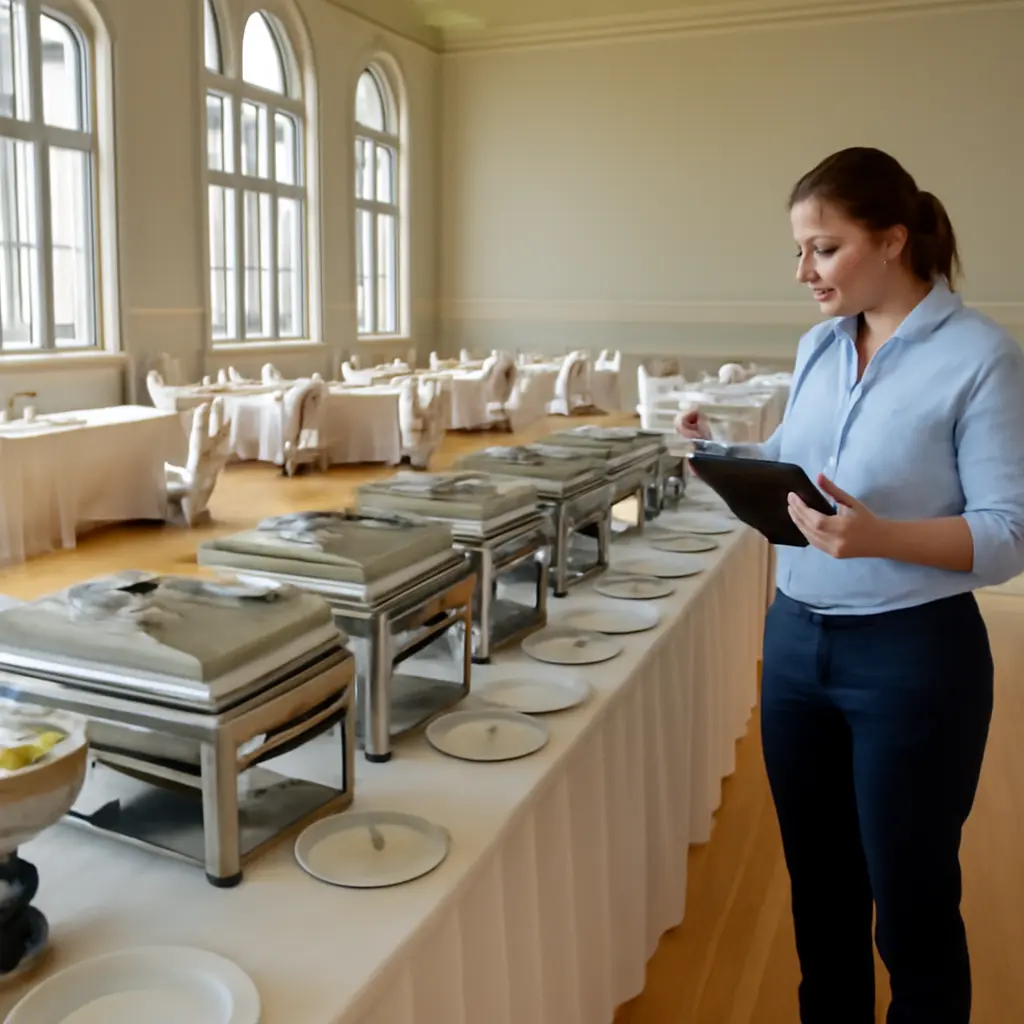
An event caterer is a food-service professional or company that plans, prepares, transports, and serves food and beverages for gatherings. Choosing the right one means matching a caterer’s experience, menu, service style, staffing, food-safety practices, and total cost to the event’s needs. The decision matters at a time when food is a substantial household expense: the U.S. Bureau of Labor Statistics reported that food accounted for 12.9% of average U.S. consumer expenditures in 2023, a reminder of how closely diners notice value. The guide below explains how to assess caterer credentials, compare menus and service models, verify logistics and safety, evaluate contracts and budgets, and make a confident final selection.
Match an Event Caterer’s Experience to the Event
Catering is the provision of prepared food and related service for an event, delivered either at the caterer’s premises or at a separate venue. The National Restaurant Association describes catering as a restaurant service segment that includes preparing and serving food away from the restaurant. For a client, the practical definition is broader: the caterer should be able to deliver the agreed menu, service, timing, staffing, and equipment under the specific conditions of the event.
Start by defining the gathering before requesting proposals. Guest count, venue, schedule, formality, accessibility needs, and the role food plays in the program all affect what “right” means. A caterer experienced in a private dinner may not be the best fit for a high-volume conference lunch, while a wedding specialist may be well suited to coordinating a lengthy reception.
Corporate and Conference Catering
Corporate catering serves business meetings, training sessions, conferences, and staff events. It often depends on punctual delivery, clear labeling, easy distribution, and the ability to serve a large group within a limited break. Ask about experience with comparable guest counts and tight service windows, and clarify who handles setup, replenishment, and cleanup.
Wedding and Social-Event Catering
Wedding and social-event catering combines food service with coordination across a longer program. The caterer may need to work alongside the venue, planner, rental company, and entertainment team. Review examples of events with a similar format, and confirm how the team handles dietary requests, speeches, schedule changes, and the transition between cocktail hour and dinner.
Specialty and Full-Service Catering
Specialty caterers focus on a cuisine, service format, or event type; full-service caterers may provide menu planning, staff, rentals, bar service, and event coordination. These categories can overlap. Request a written list of what is included, what is subcontracted, and what remains the client’s responsibility so that apparent differences between proposals are easy to compare.
Once the event type is clear, assess whether a prospective caterer can deliver the right food consistently—not just describe an appealing menu.
Evaluate an Event Caterer’s Menu and Dietary Capability
A catering menu is a proposed selection of dishes adapted to the event’s audience, service method, season, venue, and budget. It should be specific enough to communicate ingredients and portions, while flexible enough to accommodate legitimate dietary needs. The U.S. Food and Drug Administration identifies nine major food allergens: milk, eggs, fish, crustacean shellfish, tree nuts, peanuts, wheat, soybeans, and sesame. That makes clear ingredient information and a reliable process for allergy requests essential parts of menu planning.
Menu Fit, Tastings, and Portion Planning
Menu fit means choosing dishes that suit the event’s tone, guest profile, timing, and practical service conditions. Ask whether the caterer has served the proposed dishes at a similar scale and how they will be prepared and held before service. For important occasions, arrange a tasting when available; evaluate flavor, temperature, presentation, and portion size. Confirm whether tasting fees are charged and whether the final menu can differ from the tasting selections.
Allergies, Special Diets, and Ingredient Communication
Dietary accommodation is the ability to prepare and serve meals that meet guests’ stated requirements, such as vegetarian, vegan, religious, or allergy-related needs. Ask how the caterer records requests, prevents cross-contact, identifies special meals, and communicates limitations. A promise to “make something work” is less useful than a documented procedure. The FDA’s allergen list is a helpful starting point, but guests may have other intolerances or restrictions, so collect needs early and share them securely with the catering team.
Seasonal Sourcing and Menu Flexibility
Seasonal sourcing uses ingredients when they are locally or regionally available, which can shape freshness, price, and menu choices. Ask which ingredients are seasonal, where the caterer sources them, and what substitutions may be needed if supply changes. Flexibility matters, but substitutions should be approved in advance and reflected in the final written proposal.
A strong menu is only one part of the experience. The service format determines how guests receive that food and what staffing and venue resources are required.
Choose an Event Caterer’s Service Style and Staffing
Service style is the method used to present and distribute food, such as plated service, buffet, family-style dining, stations, or drop-off delivery. Each format changes guest flow, staffing needs, equipment, and the time required to serve. Select a style that supports the event schedule and venue rather than choosing by appearance alone.
Plated, Buffet, and Family-Style Service
Plated service delivers individually portioned meals to seated guests and can create a formal, coordinated experience, but it requires careful meal counts and service timing. Buffet service lets guests choose portions and can support variety, though it may require space and queue management. Family-style service places shared dishes on tables, encouraging interaction but requiring enough table space and replenishment. Ask the caterer how each option affects staffing, pacing, and the guest experience for your specific room layout.
Stations, Cocktail Service, and Drop-Off
Food stations distribute guests among themed or specialty service points, while cocktail-style service typically uses passed or displayed small bites. Both can encourage movement, but the event plan should account for crowding, dietary labels, and whether guests will have enough food. Drop-off catering delivers prepared items without full on-site service; confirm delivery timing, setup requirements, serving utensils, temperature control, and who clears the food and packaging.
Staffing, Equipment, and Venue Coordination
Staffing and equipment include the people and tools needed to prepare, serve, and clear the meal. Ask how many servers and culinary staff will attend, who supervises them, and whether the proposal includes tables, linens, plates, glassware, and warming or refrigeration equipment. The venue may impose kitchen, loading, noise, waste, or insurance requirements. Confirm these details with both venue and caterer before signing, especially where an outside vendor must use limited facilities.
With the menu and service plan established, verify that the caterer can execute safely and reliably at the venue.
Verify an Event Caterer’s Food Safety and Logistics
Food safety is the handling and preparation of food in ways that reduce the risk of contamination and foodborne illness. The U.S. Centers for Disease Control and Prevention estimates that about 48 million people in the United States get sick from foodborne illness each year. That national estimate is not a measure of catering incidents, but it underscores why safe preparation, transport, holding, and service should be part of vendor selection.
Licensing, Inspection, and Staff Training
Licensing and inspection requirements depend on state and local rules. Request the caterer’s applicable permits, proof of insurance, and information about food-safety training; then verify relevant requirements with the local health department. Ask who is responsible for food safety on event day and how staff are trained to handle allergens, hand hygiene, and temperature control.
Transport, Temperature, and Service Timing
Transport and temperature control cover how food is moved and maintained between preparation and service. The U.S. Department of Agriculture’s consumer guidance identifies the “danger zone” for perishable food as 40°F to 140°F, where bacteria can multiply rapidly. Ask how the caterer keeps hot foods hot and cold foods cold, what equipment is used, and how long food will be held. Build a realistic schedule that includes loading access, setup, guest arrival, meal service, and cleanup.
Contingency Planning and Service Recovery
Contingency planning prepares the team for disruptions such as traffic, severe weather, equipment failure, or a change in guest count. Ask who makes decisions if the schedule shifts, what backup equipment or staffing is available, and how the caterer handles a late delivery or a dish that cannot be served. The answers should identify responsible people and practical steps, not rely on vague assurances.
After confirming execution capability, compare proposals on a consistent financial basis and review the terms that govern changes and cancellations.
Compare an Event Caterer’s Pricing and Contract
A catering proposal is a priced plan for the food, service, and related items offered for an event. Compare the complete expected cost, not simply the price per person. The U.S. Bureau of Labor Statistics’ Consumer Expenditure Survey reported that food represented 12.9% of average annual consumer expenditures in 2023; for an event, the relevant lesson is to assess what the quoted amount buys and whether it fits the intended value and budget.
Build an All-In Cost Comparison
An all-in comparison includes food, labor, delivery, rentals, taxes, service charges, gratuities if applicable, and any venue-related fees. Request an itemized estimate and ask which charges are fixed, per person, or subject to change. Compare proposals using the same guest count, menu assumptions, service style, and inclusions; otherwise, a lower headline price may omit important costs.
Guest Counts, Deposits, and Payment Schedule
The contract should state the date by which the final guest count is due, whether there is a minimum charge, and how additional guests are billed. Review the deposit amount, payment dates, accepted payment methods, and consequences of late payment. Clarify what happens if attendance falls below the estimate or rises after the deadline.
Cancellation, Changes, and Service Responsibilities
Cancellation and change terms explain how either party may modify or end the agreement and what fees or refunds apply. Read provisions covering date changes, substitutions, force majeure, overtime, damage, and responsibility for rentals or cleanup. The agreement should identify the exact menu, service hours, staffing assumptions, venue access needs, and a day-of contact. Ask for unclear terms in writing before paying a deposit.
A consistent review process makes the final choice easier to justify and reduces the chance that an important detail is missed.
Select the Right Event Caterer with a Practical Checklist
A selection checklist turns a broad impression into a comparison based on evidence. Use the same criteria for each candidate, and prioritize the requirements that matter most for the event rather than treating every feature as equally important.
Questions to Ask Before Booking
- Have you catered events with a similar guest count, venue, and schedule?
- What exactly is included in the proposal, and what costs extra?
- How do you document and manage allergies and other dietary requirements?
- What permits, insurance, food-safety training, and venue approvals apply?
- Who will supervise the event, and how can that person be reached?
- How do you handle delivery delays, equipment issues, or last-minute changes?
- What are the deadlines and fees for final counts, changes, and cancellation?
A Simple Comparison Framework
Score each caterer against a short set of agreed priorities, such as relevant experience, menu fit, dietary capability, food-safety confidence, service plan, communication, and all-in cost. A comparison table can list each criterion in a row and each caterer in a column. This is a decision aid, not a substitute for checking references, tasting food, reading the contract, or verifying credentials.
Example: Planning a Company Conference Lunch
For a conference with a short lunch break, a planner might compare buffet service with individually packed meals. The buffet could offer more choice but require additional queue space and replenishment staff; packaged meals could speed distribution but demand accurate counts and clear dietary labels. The best option depends on the room layout, agenda, guest requirements, and itemized price. In either case, confirm delivery timing, food-holding procedures, waste removal, and a named on-site lead.
Conclusion: Choose an Event Caterer for Fit, Not Just Price
Choosing the right event caterer begins with matching experience to the event, then validating the menu, dietary process, service style, staffing, food-safety practices, logistics, and contract. Compare complete costs using consistent assumptions and document responsibilities, deadlines, and contingencies in writing. Since foodborne illness remains a significant public-health concern and food is a meaningful household expense, guests have good reason to expect both safe handling and clear value. Define your priorities, ask the same questions of every candidate, verify the details with your venue and local authorities, and book only when the written plan matches the experience you want to provide.
Sources: National Restaurant Association, Catering and Foodservice Resources, https://restaurant.org/; U.S. Bureau of Labor Statistics, Consumer Expenditure Surveys, https://www.bls.gov/cex/; U.S. Food and Drug Administration, Food Allergies, https://www.fda.gov/food/food-labeling-nutrition/food-allergies; U.S. Centers for Disease Control and Prevention, Estimates of Foodborne Illness in the United States, https://www.cdc.gov/foodborneburden/; U.S. Department of Agriculture, Food Safety and Inspection Service, Danger Zone (40°F–140°F), https://www.fsis.usda.gov/food-safety/safe-food-handling-and-preparation/food-safety-basics/danger-zone-40f-140f


