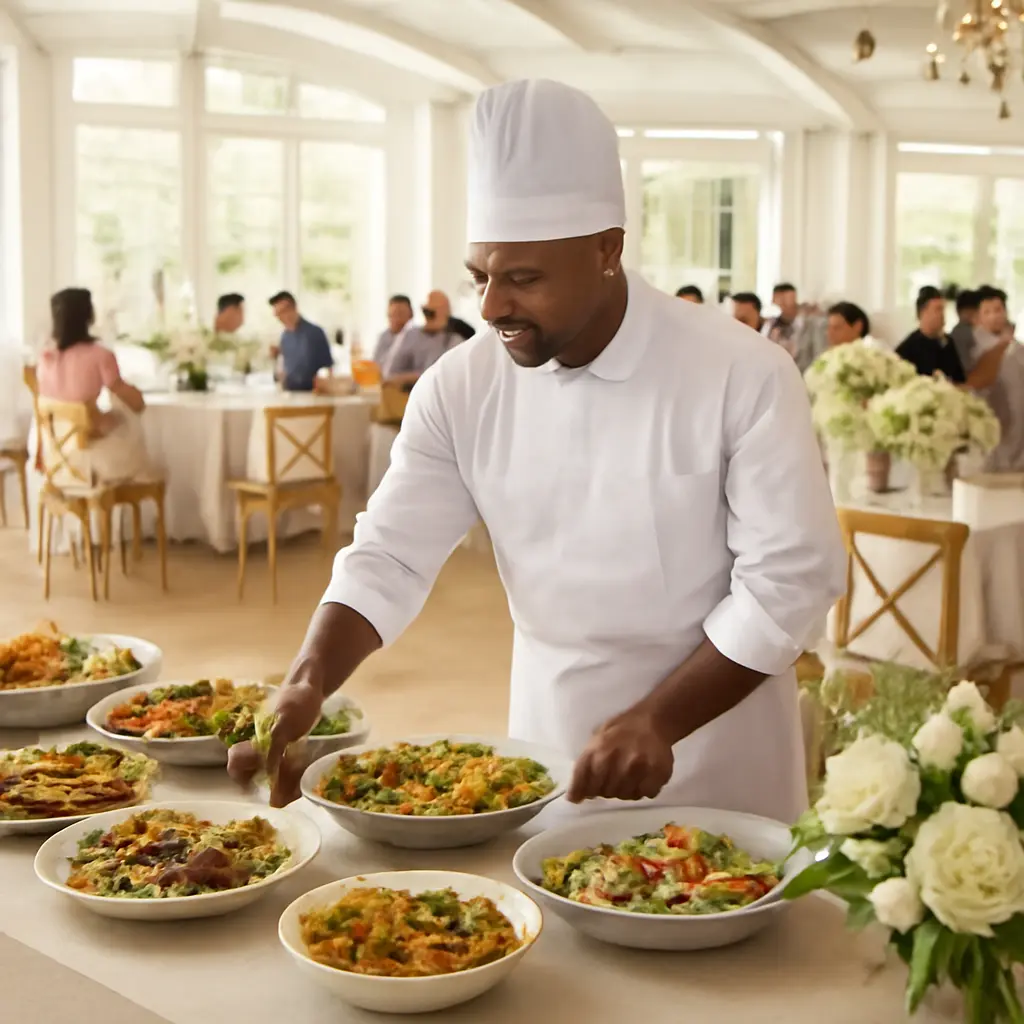
Buffet and plated dinners are two common catering styles: a buffet lets guests choose and serve food from a shared display, while a plated dinner delivers selected courses to guests at their seats. Neither is universally best. Buffets typically offer more choice and flexibility; plated service offers more predictable portions and a structured dining experience. The right choice depends on guest count, venue, budget, schedule, accessibility, and dietary needs. Those considerations matter in an industry where the National Restaurant Association reports that food and labor costs remain significant operating pressures for foodservice businesses, so an event’s service plan can affect both its budget and its guest experience.
Buffet and plated dinners: definitions and service formats
The central difference is how food reaches each guest. In buffet service, food is arranged at one or more stations and guests select portions themselves, sometimes with staff serving particular dishes. In plated service, the caterer portions and plates the meal in the kitchen or at a service station, then staff deliver it to each guest. These formats are broad categories, not rigid rules: many events combine them, for example with plated entrées and a self-serve dessert station.
Buffet service: choice at shared stations
A buffet is a meal-service format in which guests move through a food display and select from the available dishes. It can include a single line, several duplicate lines, themed stations, or staff-attended carving and serving points. Its defining feature is guest choice at the point of service, although portion sizes and access may be partly controlled by attendants.
Buffets are useful when menus need to accommodate varied appetites or preferences. Guests can often choose among several sides and entrées, while caterers can label dishes and separate vegetarian, allergen-aware, or culturally specific options. The trade-off is that guests may wait in line, popular items can run low before everyone is served, and self-service requires careful management of cleanliness, temperature, and replenishment. The U.S. Food and Drug Administration’s Food Code provides food-safety requirements for food establishments, including controls relevant to holding and serving food; event organizers should confirm how their caterer will maintain safe service conditions.
Plated service: portions delivered to the table
A plated dinner is a meal-service format in which each guest receives a prepared portion at their seat. Hosts usually collect meal selections in advance, often through invitations or registration, and the caterer coordinates meal counts and any special-diet requests. Courses may be served in sequence, creating a more formal and time-structured meal.
Because the kitchen portions dishes in advance, plated service can make quantities more predictable and reduce guest movement during dinner. It also gives the event a clear rhythm for speeches, awards, or presentations. Its operational demands include collecting accurate selections, identifying meals, and coordinating servers so that tables are served efficiently. A late change in attendance or an incomplete meal response can make execution harder, so hosts should set a clear RSVP deadline and confirm final counts with the caterer.
Hybrid formats: combining choice and structure
Hybrid service combines elements of buffet and plated dining. Examples include a plated main course followed by a buffet dessert, a served salad with a choice of entrée stations, or a family-style meal in which shared platters are placed on each table. The format can retain some of the structure of seated dining while offering choice at selected points.
Hybrid service is not automatically simpler or cheaper: it may require both table service and staffed stations. It works best when each service element has a clear purpose, such as reducing lines for a large guest list or allowing guests to choose desserts without interrupting a formal program. Once the format is clear, the decision turns to how each option performs against the event’s practical constraints.
Buffet versus plated dinner: cost, timing, and guest experience
There is no dependable rule that a buffet always costs less or that plated service is always more expensive. The total depends on the menu, staffing plan, equipment, venue, guest count, service duration, and local labor rates. Compare written proposals on the same basis: food, service staff, rentals, setup and cleanup, taxes, service charges, and any minimums. The U.S. Bureau of Labor Statistics tracks wages and employment in food-preparation and serving occupations, underscoring that labor is a real cost factor, but actual catering prices vary by location and provider.
Budget and staffing
Buffet service may reduce the need to deliver a separate plate to every guest, but it still requires labor to set up stations, replenish food, manage queues, clear tables, and maintain safe service. Attended stations can add staffing costs. Plated service requires coordinated table service and kitchen plating, while advance meal choices can help the caterer plan portions. Ask each caterer to specify the staffing assumptions behind its quote rather than comparing only a per-person food price.
Food waste is also affected by planning, menu design, portioning, and attendance accuracy—not just service style. The U.S. Environmental Protection Agency identifies wasted food as a substantial part of the U.S. waste stream and encourages prevention and measurement. For an event, practical steps include setting a realistic RSVP deadline, confirming final numbers, discussing portion sizes, and asking the caterer how leftover food is handled in accordance with food-safety rules and local requirements.
Timing, lines, and program flow
Buffets can make service duration less predictable because guests move through stations at different speeds. A single line can create a bottleneck, especially when the guest list is large or a station has a slow-to-serve item. Multiple stations, duplicate lines, table release by section, or staff-served portions can improve flow. Plated dinners avoid a buffet queue, but serving a large room still takes coordination and may require courses to pause or align with speeches and performances.
The best schedule accounts for more than the moment food is served. Ask the caterer how long setup, guest service, clearing, and course changes will take, and build the meal around the event’s program. If guests have a fixed break or the venue has a strict end time, a well-rehearsed plated service or a carefully designed multi-station buffet may be preferable to an improvised plan.
Choice, formality, and social interaction
A buffet gives guests direct control over what and how much they choose, which can suit informal receptions, family gatherings, and groups with varied tastes. It may also encourage movement and conversation. Plated service can feel more formal and keeps guests at their tables, which is helpful when the meal is part of a program. The service format alone does not determine whether an event feels welcoming; menu quality, clear communication, attentive staff, and comfortable seating matter in either arrangement.
For dietary needs, both formats require planning. Buffets can display labels and separate dishes, but shared utensils and close station layouts can create cross-contact risks. Plated service can deliver a specifically prepared meal to a guest, but only if the caterer receives accurate information and servers can identify the plate. Discuss allergies and dietary restrictions directly with the caterer, ask about ingredient and cross-contact procedures, and avoid relying on labels alone for serious allergies.
Choosing the right dinner style for your event
A sound choice starts with the event’s priorities rather than a blanket preference for one format. Consider the following factors with your venue and caterer:
- Guest count and room layout: Determine whether the space can support buffet stations and queues, or whether seated service is easier to coordinate.
- Schedule: Choose a format that fits the time available for dinner, speeches, entertainment, and transitions.
- Guest needs: Consider mobility, age range, children, accessibility, and the number of dietary requests.
- Menu: Decide whether guests need substantial choice or whether a limited set of preselected meals will work.
- Budget: Compare complete proposals, including staffing, rentals, equipment, setup, cleanup, and service charges.
- Venue rules: Confirm kitchen access, food-service requirements, room capacity, and any restrictions on outside caterers.
- Service plan: Ask how food will be replenished or delivered, how long service will take, and how the team will handle late changes.
When a buffet is a strong fit
A buffet is often a practical choice for a relaxed gathering, a varied menu, or a group that values self-selection. It may be especially suitable when the venue has enough space for well-positioned stations and the schedule allows guests to serve themselves without rushing. For a large event, ask about duplicate lines, accessible station heights, clear food labels, and attendants who can help guests who cannot comfortably serve themselves.
When plated service is a strong fit
Plated service often suits a formal dinner, a seated program, or an event where controlling the meal schedule is important. It can also help guests who would find standing in line or carrying a plate difficult. It is most reliable when meal choices are collected in advance, special meals are clearly tracked, and the caterer has an adequate staffing and kitchen plan.
A simple decision process
Use a short planning sequence to reach a decision:
- Set your priorities: identify whether budget certainty, guest choice, formality, accessibility, or speed matters most.
- Check the venue: verify that the room, kitchen, and staffing access support the service format.
- Request comparable proposals: ask caterers to quote the same menu and guest count, with all labor and rental assumptions listed.
- Test the timeline: map dinner service against speeches, entertainment, and venue restrictions.
- Confirm dietary and accessibility arrangements: agree on labeling, meal identification, assistance, and safe handling procedures.
For example, a company awards dinner with timed presentations may favor plated service because guests remain seated and the meal can be coordinated with the program. A community celebration with a broad range of preferences may benefit from a buffet with several clearly labeled stations. These are planning illustrations, not universal rules: the venue, caterer, and guest needs can change the best answer.
Conclusion: match dinner service to the event
Buffet service provides choice and flexibility, while plated service provides pre-portioned meals and a more structured table experience. Hybrid formats can combine those strengths, but may also combine their staffing and coordination demands. The best option depends on the full event plan: budget, timing, room layout, menu, accessibility, food safety, and guest preferences. Before booking, compare complete catering proposals and ask each provider to explain its service timeline, staffing, dietary procedures, and waste plan. A careful discussion with the venue and caterer is the most useful next step toward a dinner that works for both guests and hosts.
Sources: National Restaurant Association, 2025 State of the Restaurant Industry, https://restaurant.org/research-and-media/research/research-reports/state-of-the-restaurant-industry/; U.S. Food and Drug Administration, Food Code 2022, https://www.fda.gov/food/fda-food-code/food-code-2022; U.S. Bureau of Labor Statistics, Occupational Employment and Wage Statistics, Food Preparation and Serving Related Occupations, https://www.bls.gov/oes/current/oes350000.htm; U.S. Environmental Protection Agency, Sustainable Management of Food, https://www.epa.gov/sustainable-management-food