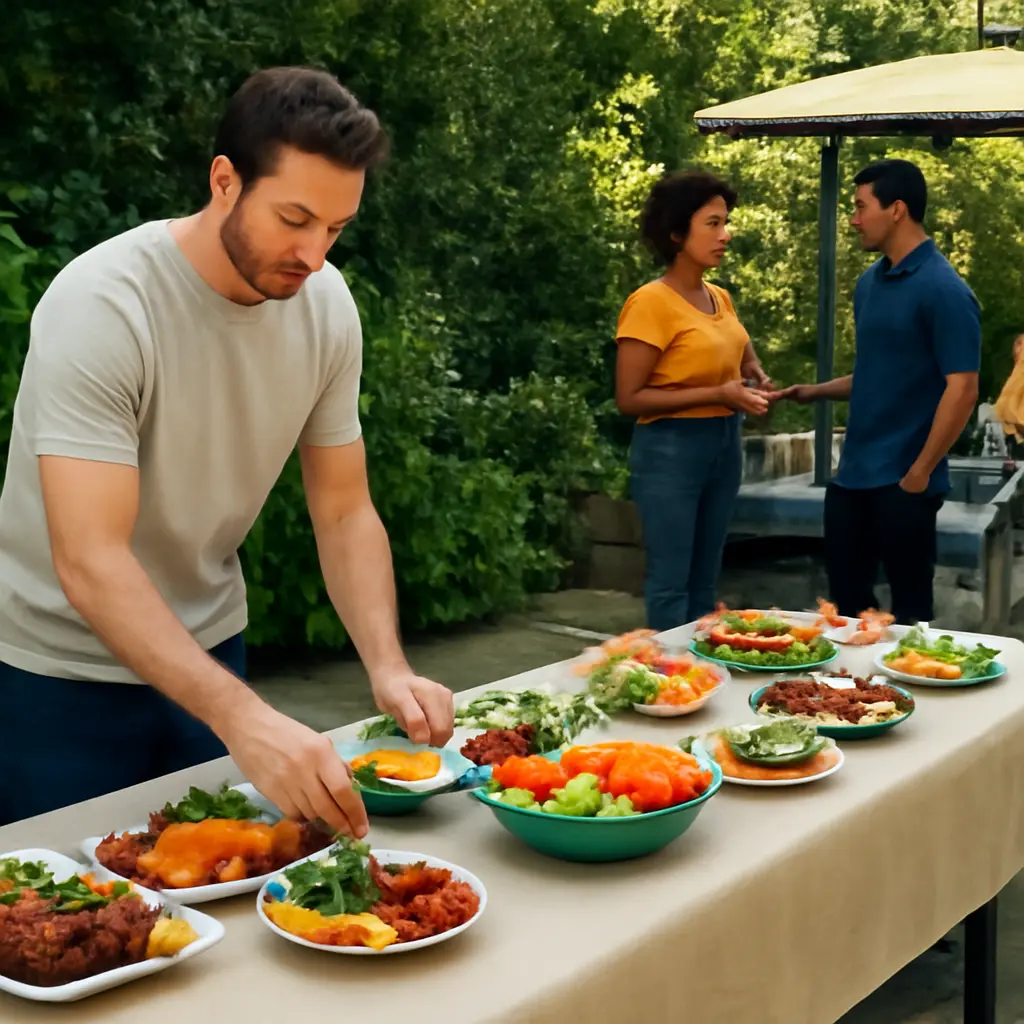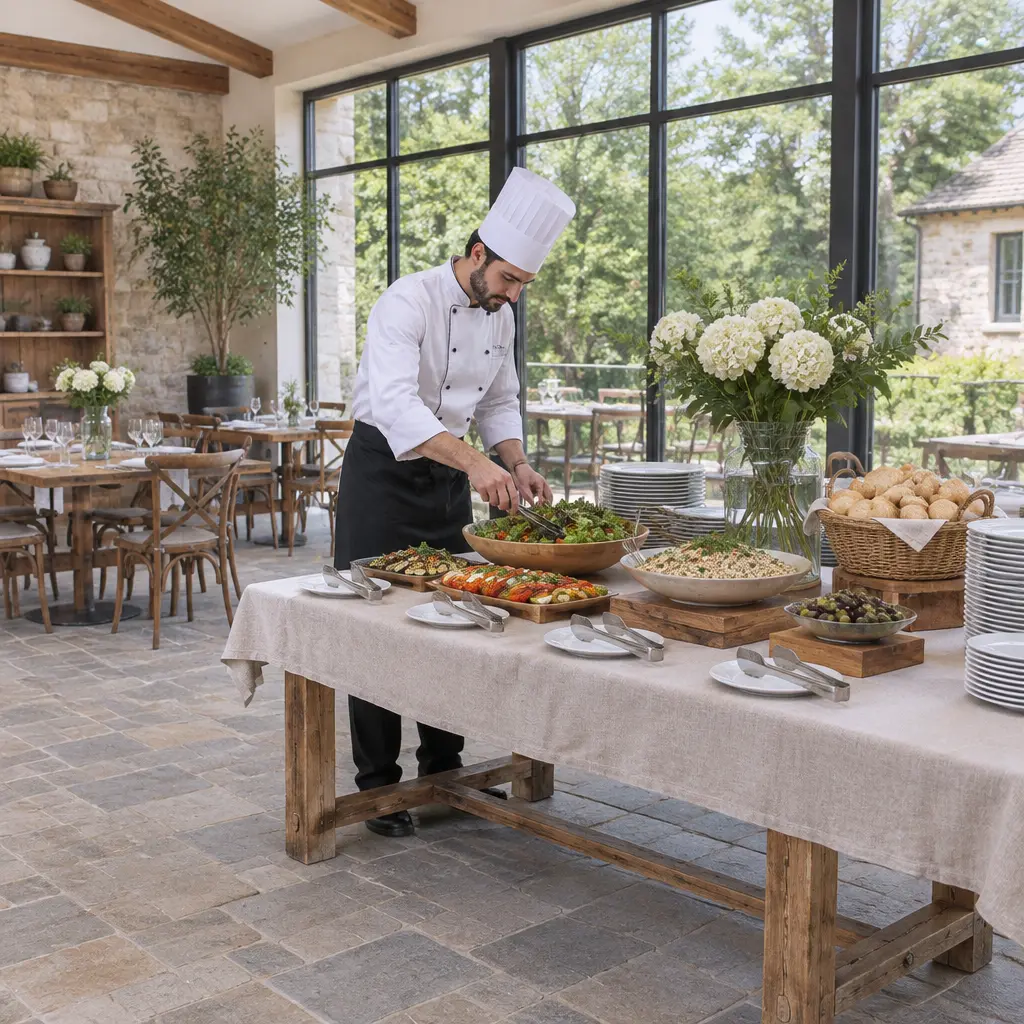
Dietary-inclusive menus are menus designed so people with different dietary needs can share the same meal without being singled out by separate, visibly segregated plates. They make inclusion a feature of the menu’s overall design: a shared dish may suit several needs, while clearly identified options and careful service address requirements that cannot safely be combined. This matters in a food-service sector serving customers with allergies, medical restrictions, religious practices, and ethical preferences. The CDC estimates that 6.2% of U.S. adults—about 16 million people—have a diagnosed food allergy. A successful approach therefore combines thoughtful recipes, transparent ingredient information, cross-contact controls, and inclusive presentation rather than relying on appearance alone.
Designing Dietary-Inclusive Menus Around Shared Meals
A dietary-inclusive menu is a planned selection of food and service practices that accommodates varied dietary requirements while preserving a sense of shared dining. It does not mean every item must meet every restriction, nor that separate meals are never appropriate. It means the menu is designed to avoid unnecessary separation, with suitable dishes incorporated into the common offering and exceptions managed discreetly, accurately, and safely.
The distinction is important: a dish that is vegetarian or gluten-free is not automatically safe for someone with a food allergy, and a dish labeled “inclusive” cannot replace individual confirmation. The Food and Drug Administration identifies nine major U.S. food allergens: milk, eggs, fish, crustacean shellfish, tree nuts, peanuts, wheat, soybeans, and sesame. Meanwhile, dietary choices can also arise from religious observance, such as halal or kosher practice, or from ethical preferences such as veganism. Strong menu planning recognizes this diversity without treating all needs as interchangeable.
Integrating Restrictions Through Menu Architecture
Menu architecture is the deliberate organization of ingredients, dishes, substitutions, and service information so that a wider range of guests can choose from the same meal. In practice, it favors naturally adaptable dishes, modular components, and clear descriptions over a main menu that excludes some diners and a visibly separate “special” menu for everyone else.
Naturally inclusive shared dishes
A naturally inclusive dish is built from ingredients that already meet several common preferences or restrictions, rather than being converted through last-minute substitutions. For example, a vegetable-and-bean stew can be plant-based and dairy-free by design; diners can add optional toppings at the table. A grain bowl with separate sauces and proteins can offer choice while keeping the base dish consistent. These examples require verification: stock, spice blends, garnishes, and cooking fats can introduce animal products or allergens unexpectedly.
This approach supports shared presentation because diners receive recognizable versions of the same composed meal. It also helps kitchens plan ingredients more efficiently. The National Restaurant Association’s annual industry research consistently identifies off-premises dining and menu customization as important industry considerations, reinforcing the value of recipes that can be adapted without becoming entirely different dishes.
Modular components and choice
Modular menu design separates a dish into compatible components—such as a base, protein, vegetables, sauce, and garnish—so guests can assemble a meal suited to their needs. A taco or bowl station, for instance, may offer rice, beans, vegetables, several proteins, and clearly identified sauces. Components should be described accurately, and utensils, preparation surfaces, and serving arrangements must prevent cross-contact where allergy safety is a concern.
Modularity is not a substitute for kitchen controls. The FDA Food Code provides a model for retail food safety, including food handling and allergen-awareness provisions, but local adoption and requirements vary. Operators should train staff to answer ingredient questions, consult recipe records, and escalate uncertainty rather than guess.
Inclusive menu language and labeling
Inclusive labeling gives guests useful information without defining them by a restriction. Concise descriptions can identify ingredients and mark suitable choices—for example, “plant-based” or “contains sesame”—while a legend explains symbols. Labels should distinguish “made without” an ingredient from “free from” that ingredient when shared equipment or preparation areas could create cross-contact.
In the United States, the FDA requires packaged foods to declare major allergens under federal labeling law, but restaurant menus are governed by a different mix of federal, state, and local rules. Therefore, a menu icon is best treated as a communication aid, not as a blanket safety guarantee. Staff should be able to verify the recipe and explain the limits of the kitchen’s controls.
Protecting Safety Without Segregated Plating
Shared presentation and individualized safety are compatible when the service system—not a conspicuous plate—does the work of accommodation. A diner with a serious allergy may need a separately prepared dish, but the kitchen can handle it discreetly and explain the precautions directly. Inclusion means avoiding unnecessary social separation; it does not mean concealing a necessary safety distinction.
Allergen controls and cross-contact prevention
Cross-contact occurs when an allergen is unintentionally transferred to food that should not contain it. Controls include accurate ingredient lists, clean and sanitized work areas, dedicated or thoroughly cleaned equipment where appropriate, separate storage, handwashing, and clear communication between front- and back-of-house staff. The CDC’s estimate that 6.2% of U.S. adults have a diagnosed food allergy illustrates why these measures are a routine service responsibility, not an occasional courtesy.
Restaurants should never promise that a dish is allergen-free unless their procedures support that claim. When the risk cannot be controlled, staff should say so plainly and help the customer assess available choices. The FDA advises people with food allergies to read labels and avoid foods that trigger reactions; in restaurant settings, that caution makes dependable ingredient information and honest communication essential.
Religious, ethical, and medical requirements
Dietary requirements differ in both purpose and practical detail. Halal and kosher observance may involve ingredients, preparation, equipment, and certification; vegan choices exclude animal-derived ingredients, while vegetarian practices vary; medical diets may involve specific clinical instructions. A menu should avoid assuming that one label answers every question—for example, “vegetarian” does not establish that a dish is halal, kosher, or safe for a particular allergy.
A useful service practice is to invite guests to state what they need, then ask only the clarification necessary to prepare or recommend food safely. Where certification or a particular preparation standard is required, the establishment should be transparent about whether it can meet that standard rather than imply equivalence.
Discreet service and shared-table presentation
Discreet service keeps the meal socially cohesive while preserving accurate communication. Staff can confirm a special request privately, deliver the appropriate dish without announcing a diner’s medical or religious information, and explain any necessary difference directly to that guest. Shared platters should be arranged so that guests can identify components and use separate serving utensils; where allergen risks cannot be adequately managed, individual portions may be safer.
The guiding principle is choice without stigma, not identical plating at any cost. A plate may differ for safety, religious compliance, or personal preference while still belonging to the same meal and receiving the same attentive service.
Putting Inclusive Menu Design Into Practice
Implementation works best as a repeatable process spanning menu development, purchasing, kitchen operations, and guest communication. The following sequence helps teams identify suitable shared dishes while preserving safeguards for requirements that cannot be combined.
- Inventory common guest needs, including food allergies, religious observances, medical restrictions, and ethical preferences.
- Review recipes and supplier specifications, recording ingredients and potential allergen sources for each dish.
- Build a core menu with naturally inclusive dishes, then use modular components or clearly explained substitutions where practical.
- Establish preparation, cleaning, storage, and service procedures to reduce cross-contact and prevent order errors.
- Train staff to communicate confidently, avoid unsupported safety promises, and offer discreet assistance.
- Gather feedback and review incidents, unmet requests, waste, and sales to improve the menu over time.
Example: a shared buffet with safeguarded choices
Consider a buffet serving roasted vegetables, rice, beans, a meat entrée, and several sauces. The vegetables, rice, and beans can form a shared plant-based meal if recipes and cooking methods confirm that they contain no animal-derived ingredients. Sauces can be labeled with full ingredient information, and serving utensils can be assigned to each dish. An allergen-sensitive request should then be assessed separately with the kitchen: if shared buffet equipment creates unacceptable cross-contact risk, staff can offer a freshly prepared alternative or explain that the kitchen cannot safely meet the request.
This example demonstrates how menu architecture, transparent labeling, and careful service work together. It also shows why a general dietary label is not enough to establish safety. A chart accompanying this article could map each menu component against allergens, animal-derived ingredients, and preparation controls, helping teams see where a shared dish works and where an individual procedure is necessary.
Conclusion: Make Inclusion Part of the Meal
Dietary-inclusive menus integrate restrictions through shared dishes, modular choices, precise labeling, allergen controls, and discreet service. Menu architecture reduces unnecessary separation; safety procedures address cross-contact; and staff communication respects medical, religious, ethical, and personal needs without treating them as interchangeable.
The broader implication is that inclusion depends on both hospitality and operational discipline. Food-service teams should review recipes, consult local rules, train employees, and invite guest feedback. Further guidance is available from the FDA, CDC, and local public-health authorities. The practical call to action is simple: design the common menu to welcome more people, and build reliable individual safeguards for the needs that cannot safely be served in common.
Sources: Centers for Disease Control and Prevention, Food Allergies, https://www.cdc.gov/healthyschools/foodallergies/; U.S. Food and Drug Administration, Food Allergies, https://www.fda.gov/food/food-labeling-nutrition/food-allergies; U.S. Food and Drug Administration, Food Code 2022, https://www.fda.gov/food/retail-food-protection/fda-food-code; National Restaurant Association, Research and Insights, https://restaurant.org/research-and-media/research/.