
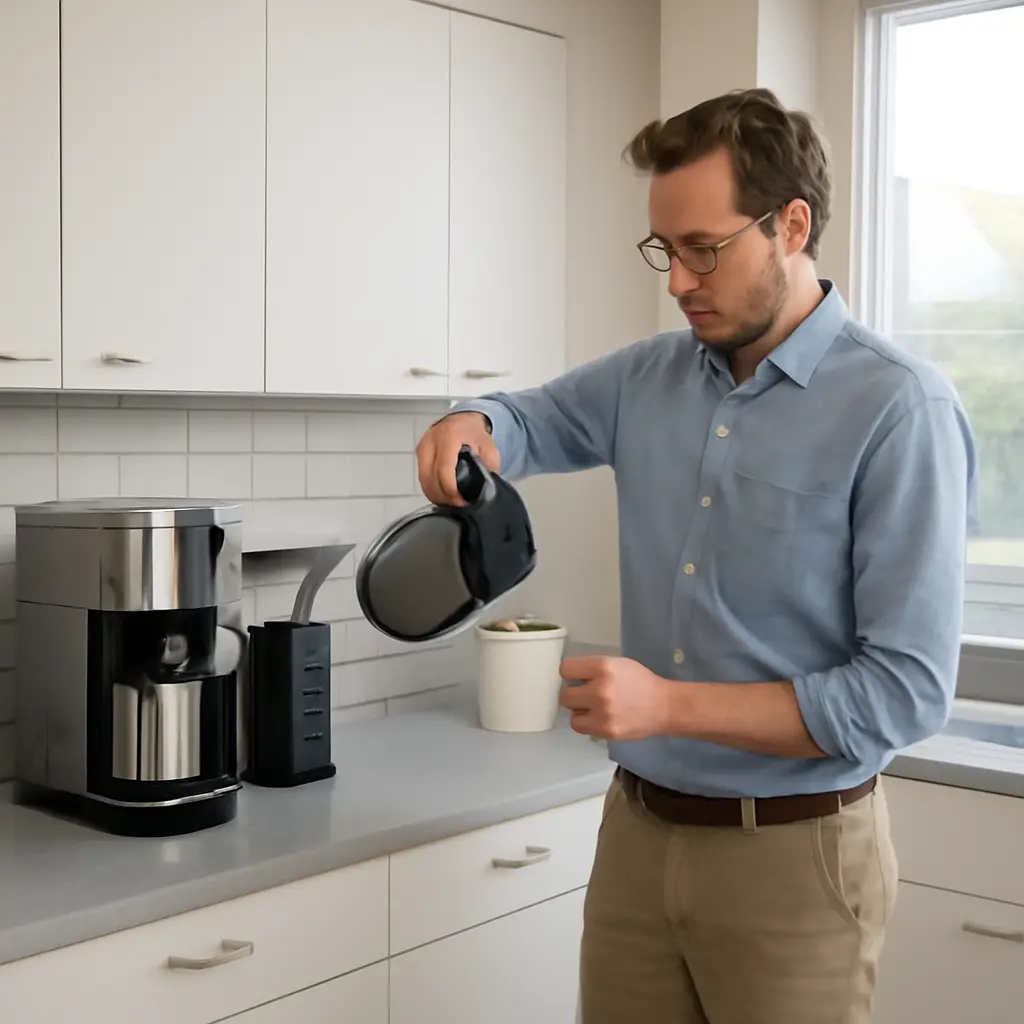
Corporate coffee can taste fresh and satisfying rather than scorched when employers choose recently roasted beans, appropriate brewing equipment, clean maintenance routines, and a setup that matches how employees actually drink coffee. The National Coffee Association reported that 67% of U.S. adults drank coffee in the past day in its 2024 National Coffee Data Trends report, making workplace coffee a routine part of many employees’ days. Improving it does not require a café-sized budget: the most consequential decisions are often bean freshness, water quality, brewing temperature, and how long brewed coffee sits on a heat source.
Workplace Coffee Quality Depends on Freshness, Water, and Brewing
“Burnt” office coffee is usually not a single defect. It can describe stale or over-roasted beans, bitter extraction, residue in a neglected brewer, or coffee kept hot for too long. The Specialty Coffee Association (SCA) defines specialty coffee through distinctive attributes and a high standard of quality, while its brewing guidance connects a good cup to factors such as water, grind, coffee dose, and extraction. Those principles apply just as well to an office batch brewer as to a home setup.
The practical fix is to treat coffee as a small service system, not just a machine and a can of grounds. Employers can improve taste by buying coffee in quantities that will be used while fresh, matching the grind to the brewer, using filtered water when needed, and serving smaller batches more frequently. Clear labeling and employee feedback help ensure upgrades suit the people who drink it.
Freshness is a purchasing and storage decision
Coffee freshness refers to how well roasted coffee retains its aroma and flavor after roasting and exposure to air, moisture, heat, and light. Whole beans generally retain their aromatic compounds better than pre-ground coffee because grinding increases the surface area exposed to oxygen. That does not mean every workplace needs premium micro-lots; it means buying manageable amounts, checking roast dates where available, and storing beans in a cool, dry, airtight container.
The National Coffee Association advises storing coffee in an airtight, opaque container in a cool, dark place and grinding shortly before brewing when possible. For an office, the right purchase size depends on consumption and delivery frequency. A rotating supply of modest-sized bags is often more useful than a bulk order that sits open for months.
Brewing controls limit bitterness
Extraction is the process by which water dissolves flavor compounds from ground coffee. Under-extraction can taste sour or thin; over-extraction can taste harsh and bitter. The SCA’s brewing standards use a water temperature range of 195–205°F (90–96°C) and describe a commonly cited coffee-to-water brewing ratio around 55 grams of coffee per liter of water, with adjustment for preference and brewing method.
These figures are useful starting points, not a guarantee of identical results from every machine. A grind that is too fine, an incorrect dose, or uneven water distribution can all affect taste. If coffee is consistently bitter, change one variable at a time: verify the grind, check the recipe, and then assess whether the brewer is clean and functioning correctly.
Office Coffee Equipment Should Match the Way Employees Drink
Office coffee equipment is the collection of brewers, grinders, serving vessels, and maintenance tools used to prepare and hold coffee at work. The best option depends on the number of users, peak demand, staff time, and whether employees value variety or speed. A high-volume machine is not automatically the best choice if it makes more coffee than people drink before the flavor declines.
Batch brewers suit predictable demand
A batch brewer prepares a pot or urn of coffee at once. It can serve a busy office efficiently, especially during morning peaks, but quality suffers when a large batch sits too long. Thermal carafes can help preserve serving temperature without continuously heating the coffee on a hot plate. Smaller batches, brewed more often, can reduce waste and limit the stale or cooked flavors employees commonly call “burnt.”
For workplaces with variable attendance, a simple log of batch size and leftovers can guide changes. If half a pot is regularly discarded, brew less; if employees repeatedly wait for coffee, adjust batch timing or capacity. This is a straightforward example of using operational data to improve both experience and cost control.
Single-cup systems prioritize choice and portion control
Single-cup brewing prepares one serving at a time, often from a pod or measured dose of grounds. It can suit smaller teams or offices where people want different strengths and decaf options, while avoiding a pot left standing. Trade-offs include the price of individual portions, ongoing supply management, and packaging waste. Reusable or recyclable options may help, but the actual environmental outcome depends on the materials and local collection systems.
A workplace can compare the full cost per cup, including equipment, coffee, filters or pods, cleaning, and waste handling. Employees may also appreciate having a batch brewer alongside a single-cup option when demand is mixed.
Grinders and water treatment affect every brewing method
A grinder produces coffee particles sized for a brewing method, while water treatment reduces unwanted tastes or mineral-related problems. Inconsistent grind size can create a cup in which some particles extract too quickly and others too slowly. Hard water can also contribute to mineral scale in equipment, while strong chlorine or other off-flavors may carry into the brew.
The U.S. Environmental Protection Agency regulates public drinking-water contaminants and requires consumer confidence reports from water suppliers, but regulatory compliance does not guarantee that water tastes ideal for coffee. Offices can review local water information and follow the brewer manufacturer’s guidance on filters and descaling. Filtration should be selected for the actual water issue rather than installed as a substitute for diagnosing it.
Coffee Service Needs Consistent Cleaning and Sensible Holding
Coffee service is the routine that connects ingredients and equipment to the cup employees receive. Even good beans can taste unpleasant if oils and residue build up in a brewer, grinder, carafe, or dispenser. A repeatable cleaning schedule protects flavor, supports equipment performance, and makes responsibility clear.
Cleaning removes accumulated coffee oils
Coffee oils and fine particles can cling to surfaces and become rancid or bitter over time. Daily washing of removable parts, regular cleaning of dispensing equipment, and periodic descaling help prevent old residue from contaminating fresh coffee. Follow the manufacturer’s instructions for cleaning agents and rinse thoroughly; an improvised chemical mixture can damage equipment or leave unwanted residues.
A practical workplace checklist should name the task, frequency, and responsible role. For example, employees can rinse and wash carafes after use, while facilities staff handle scheduled deep cleaning and descaling. The right schedule varies by machine and water hardness, so manufacturer instructions should take precedence over a one-size-fits-all calendar.
Holding time matters as much as brewing
Holding time is how long brewed coffee remains in a serving vessel before it is consumed. Continuous heat can accelerate flavor deterioration, producing flat, bitter, or “cooked” notes. Thermal servers avoid direct hot-plate exposure, but coffee still loses freshness with time. Brewing a fresh, smaller batch at predictable intervals is often a better quality strategy than keeping a full pot hot all morning.
A visible brew-time label can help staff judge whether coffee should be refreshed. Offices should set a reasonable internal standard based on taste tests, equipment guidance, and actual consumption rather than assuming that hotter coffee is always better coffee.
A Low-Cost Workplace Coffee Upgrade Can Start With a Taste Test
A taste test is a simple way to distinguish between complaints about the coffee itself and problems caused by brewing or service. Before replacing equipment, prepare the current coffee with fresh beans, clean equipment, filtered or otherwise suitable water, and a measured recipe. Then compare it with the usual office cup. This controlled comparison can reveal whether the main issue is stale stock, recipe inconsistency, or holding time.
For example, an office that changes to smaller batches in thermal carafes may reduce the cooked taste without buying a new brewer. Another workplace may find that the machine is clean but the pre-ground coffee has been open too long. Recording employee preferences for regular, decaf, strength, and milk options can prevent spending on features nobody uses.
A practical improvement plan can follow these steps:
- Ask employees what tastes wrong and when the coffee is most often disappointing.
- Clean the brewer and serving vessels, then check the machine’s instructions.
- Use a fresh, appropriately sized coffee supply and measure coffee and water consistently.
- Compare filtered water with the current water if taste or scale is a concern.
- Serve smaller batches in thermal vessels and gather feedback after the change.
Conclusion: Better Corporate Coffee Is a Repeatable Process
Corporate coffee does not have to taste like burnt water. Freshness, correct extraction, suitable equipment, clean components, and sensible holding practices work together to improve the cup. Employers can begin with low-cost changes—buying coffee in usable quantities, measuring the recipe, cleaning regularly, and brewing smaller batches—before investing in new machinery.
Because coffee is a daily workplace ritual for many people, a modest improvement can make a shared space more welcoming while reducing waste from undrinkable pots. Start with a short taste test, ask employees what they prefer, and use the results to build a coffee routine that is both practical and enjoyable.
Sources: National Coffee Association, National Coffee Data Trends 2024, https://www.ncausa.org/Industry-Resources/Market-Research/NCDT; National Coffee Association, How to Store Coffee, https://www.ncausa.org/About-Coffee/How-to-Store-Coffee; Specialty Coffee Association, Coffee Standards, https://sca.coffee/research/coffee-standards; U.S. Environmental Protection Agency, Consumer Confidence Reports, https://www.epa.gov/ccr
