
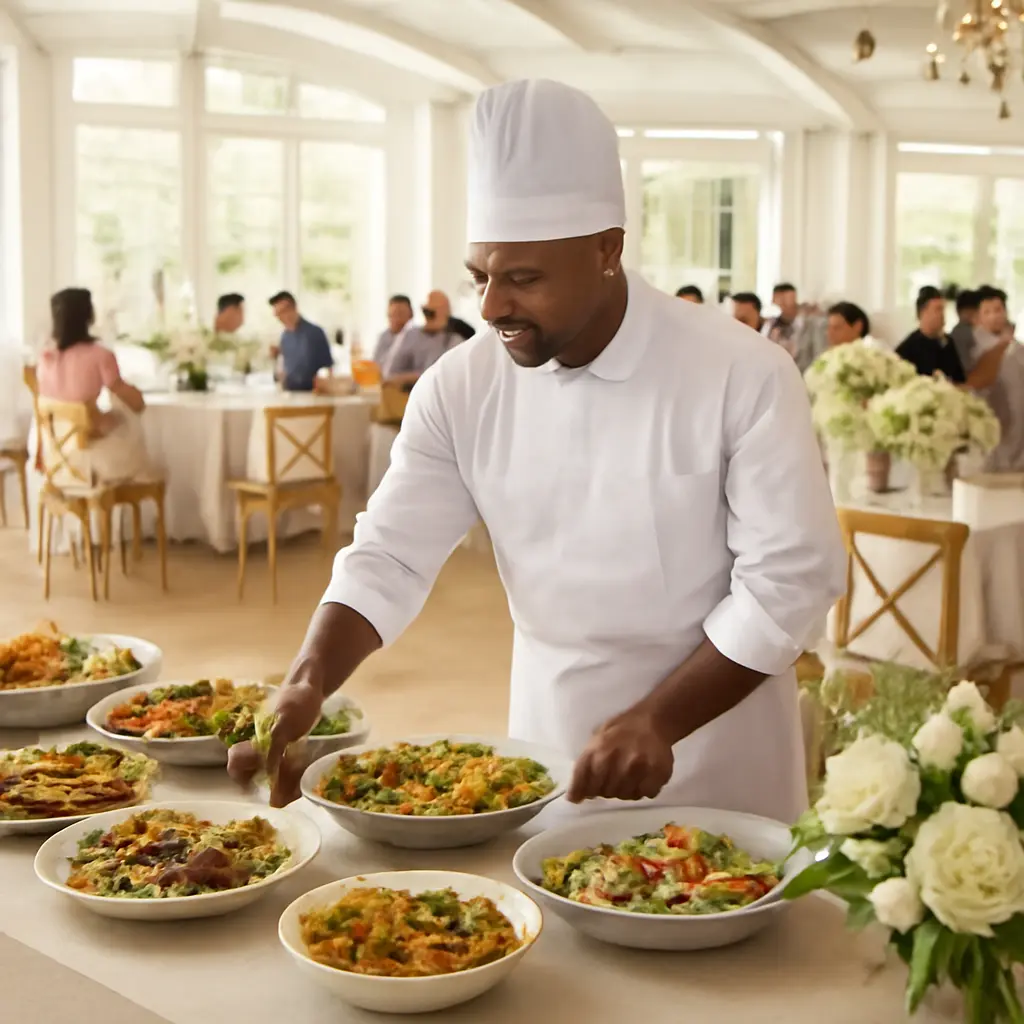
Modern wedding catering is the planning and delivery of food and beverage service tailored to a couple’s celebration, guests, venue, and budget. Today’s approach extends beyond a traditional plated meal: couples are combining interactive food stations, personalized menus, sustainable sourcing, and inclusive options to make dining part of the experience. The trends matter at scale: The Knot’s 2024 Real Weddings Study reported an average U.S. wedding cost of $33,000, with catering among the major budget categories. Understanding current options helps couples balance guest experience, logistics, and cost.
Modern wedding catering emphasizes personalization and guest experience
Wedding catering is the coordinated provision of food, beverages, staffing, and service for a wedding or reception. The U.S. Small Business Administration describes catering businesses as providers of prepared food and related services for events, while wedding planners commonly distinguish catering by its menu, service style, and event logistics. For couples, the practical definition is broader: catering is both a meal and a designed part of the celebration.
Modern catering commonly includes plated dinners, buffets, family-style service, food stations, cocktail-hour canapés, and late-night snacks. These formats can be combined, but each affects staffing, venue flow, food safety, and the time available for speeches and dancing. The Knot’s study places the average U.S. wedding at about 115 guests, making clear service planning important even when a celebration feels intimate.
Personalized menus and regional identity
A personalized wedding menu reflects the couple’s tastes, cultural traditions, family recipes, or connection to a region. It may pair familiar dishes with contemporary presentation, or feature a focused menu built around local ingredients. Personalization works best when the menu remains coherent and serviceable: caterers should assess ingredient availability, preparation requirements, guest counts, and the venue’s kitchen facilities before confirming distinctive dishes.
For example, a couple might serve a regional seafood course, a family-style dish associated with one partner’s heritage, and a locally made dessert. The menu can tell a story without making every course experimental. Couples should ask for a tasting and confirm substitutions, portion sizes, and final ingredient lists in writing.
Interactive stations and experience-led service
Interactive catering gives guests choices or a role in assembling food, through chef-attended carving, taco or noodle stations, made-to-order pasta, and dessert bars. These setups can encourage conversation and add visual energy, especially during cocktail hour. Their success depends on layout: stations need enough space, clear queues, accessible serving heights, and replenishment plans to prevent bottlenecks.
A hybrid format can preserve the predictability of a seated main course while offering an interactive appetizer or dessert station. Couples should compare staffing and rental needs with a conventional buffet, rather than assuming that a visually appealing station will be less expensive.
Personalization and interactive service shape what guests see and taste; the next planning priority is ensuring that the menu works for the full range of guests and reflects responsible sourcing choices.
Inclusive and sustainable menus broaden modern wedding catering
Inclusive catering accounts for dietary requirements, accessibility, cultural practices, and different preferences without isolating guests unnecessarily. Sustainable catering aims to reduce environmental impacts through choices such as seasonal purchasing, thoughtful portions, reusable serviceware, and food-waste planning. These are related but distinct goals: a locally sourced menu, for instance, is not automatically suitable for every diet, and an allergy-safe meal may require special handling regardless of its sourcing.
Dietary accommodations and allergy communication
Dietary accommodations are menu adjustments for needs such as vegetarian or vegan diets, religious restrictions, and medically necessary allergen avoidance. The U.S. Food and Drug Administration identifies nine major food allergens: milk, eggs, fish, crustacean shellfish, tree nuts, peanuts, wheat, soybeans, and sesame. Because cross-contact can occur during storage and preparation, asking a caterer to “leave out” an ingredient may not be sufficient for a guest with a serious allergy.
Couples should collect dietary information through invitations or a wedding website, share it securely with the caterer, and request a documented plan for ingredient checks and separate preparation where needed. The final guest count should identify meals clearly, while servers should know how to deliver them discreetly. The FDA’s allergen guidance offers a useful reminder that clear ingredient communication is part of food safety, not merely a menu preference.
Seasonal sourcing and lower-waste service
Seasonal sourcing means choosing ingredients when they are naturally available in the event’s region, while lower-waste service reduces avoidable surplus and disposable materials. The U.S. Environmental Protection Agency estimates that food waste accounts for about 24% of municipal solid waste disposed of in landfills. That national figure is not a wedding-specific estimate, but it underscores why event planners should discuss portion forecasting and leftovers with their caterers.
Practical measures include confirming guest counts promptly, selecting a menu that uses overlapping ingredients, offering reusable or compostable serviceware when venue infrastructure supports it, and arranging safe donation or take-home procedures in advance. Couples can ask caterers how they track surplus, handle food donations, and verify claims about local or sustainable sourcing.
Once menu inclusivity and sourcing are established, couples can choose a service style that fits the venue, schedule, and spending plan—because the same dishes can require very different operations when served in different ways.
Service formats and technology shape catering logistics
Catering service format describes how food moves from the kitchen to guests. Plated service offers controlled portions and a formal rhythm; buffet service gives guests choices; family-style service places shared dishes at tables; and stations distribute service across several points. No format is universally best. The choice depends on guest mobility, venue layout, kitchen access, staffing, timing, and the couple’s priorities.
Plated, buffet, and family-style meals
Plated meals typically require advance entrée selections and coordinated serving teams, but they can create a predictable dining schedule. Buffets can offer variety and accommodate different appetites, though they may need queue management and frequent replenishment. Family-style service supports sharing and conversation but requires table space and careful portion planning. Costs vary by caterer and location: a buffet is not automatically cheaper if it requires extensive staffing, rentals, or complex food displays.
Before choosing, couples should ask for a complete estimate that separates food, labor, rentals, taxes, service charges, and overtime. They should also confirm whether the venue requires an approved caterer or provides kitchen equipment and serviceware.
Digital planning, RSVPs, and operational coordination
Digital wedding tools help couples collect meal selections, communicate dietary needs, track guest counts, and share run-of-show details with planners and vendors. These systems can reduce manual errors, but they do not replace a final verified count or direct communication about allergies. A practical workflow sets a response deadline, assigns one person to reconcile changes, and sends the caterer an approved seating and meal list before production begins.
Technology also supports coordination on the event day through shared timelines and contact sheets. The most useful tools are those that clarify responsibilities—who confirms delivery, handles late arrivals, approves substitutions, and directs leftover food—rather than adding extra platforms without a clear purpose.
Budgeting and planning turn catering trends into workable choices
Wedding catering budgets depend on guest count, menu complexity, service style, location, staffing, rentals, and contract terms. The Knot’s 2024 study reported an average U.S. wedding cost of $33,000; this is a broad national benchmark, not a catering quote or a prediction for any individual event. Couples should use local proposals and a detailed service estimate to make decisions.
Compare total costs, not menu prices alone
A per-person food price may exclude labor, bar service, delivery, cake cutting, rentals, taxes, gratuity, or venue fees. Ask each caterer to provide comparable proposals with the same guest count, meal format, beverage assumptions, and service duration. Confirm how the contract handles final counts, overtime, price changes, cancellations, and unexpected shortages.
A useful comparison table can list each proposal’s food and beverage charges, staffing, rentals, fees, and included services. It helps couples see whether a lower headline price actually produces a lower total.
A practical planning sequence
A structured process reduces last-minute changes and helps caterers make realistic staffing and purchasing decisions.
- Set a working guest count, budget range, and preferred service style.
- Check venue rules, kitchen access, equipment, and approved-vendor requirements.
- Request itemized proposals and compare total costs on the same assumptions.
- Schedule tastings and confirm menu details, dietary accommodations, and allergens.
- Collect guest responses, verify the final count, and document meal assignments.
- Agree on delivery, service timing, staffing, leftovers, and the day-of contact plan.
Conclusion: Modern wedding catering balances experience, inclusion, and practicality
Modern wedding catering brings together personalized menus, interactive service, inclusive dietary planning, sustainable practices, and well-chosen meal formats. The strongest plans match the couple’s priorities with the venue’s capabilities and a transparent budget. Use national cost data as context, not a substitute for local quotes; verify allergy procedures directly; and ask caterers how they manage staffing, waste, and service timing. Couples beginning their planning can compare itemized proposals and use FDA and EPA guidance to build a guest-friendly, safe, and thoughtful reception menu.
Sources: The Knot, 2024 Real Weddings Study, https://www.theknot.com/content/real-weddings-study; U.S. Food and Drug Administration, Food Allergies, https://www.fda.gov/food/food-labeling-nutrition/food-allergies; U.S. Environmental Protection Agency, Food: Material-Specific Data, https://www.epa.gov/facts-and-figures-about-materials-waste-and-recycling/food-material-specific-data; U.S. Small Business Administration, Choose a Business Structure, https://www.sba.gov/business-guide/launch-your-business/choose-business-structure.


